

Dermaplaning

Treatments
Start Your Skin PlanSkin Concerns
Return to Skin ConcernsDermaplaning
Treatment Description
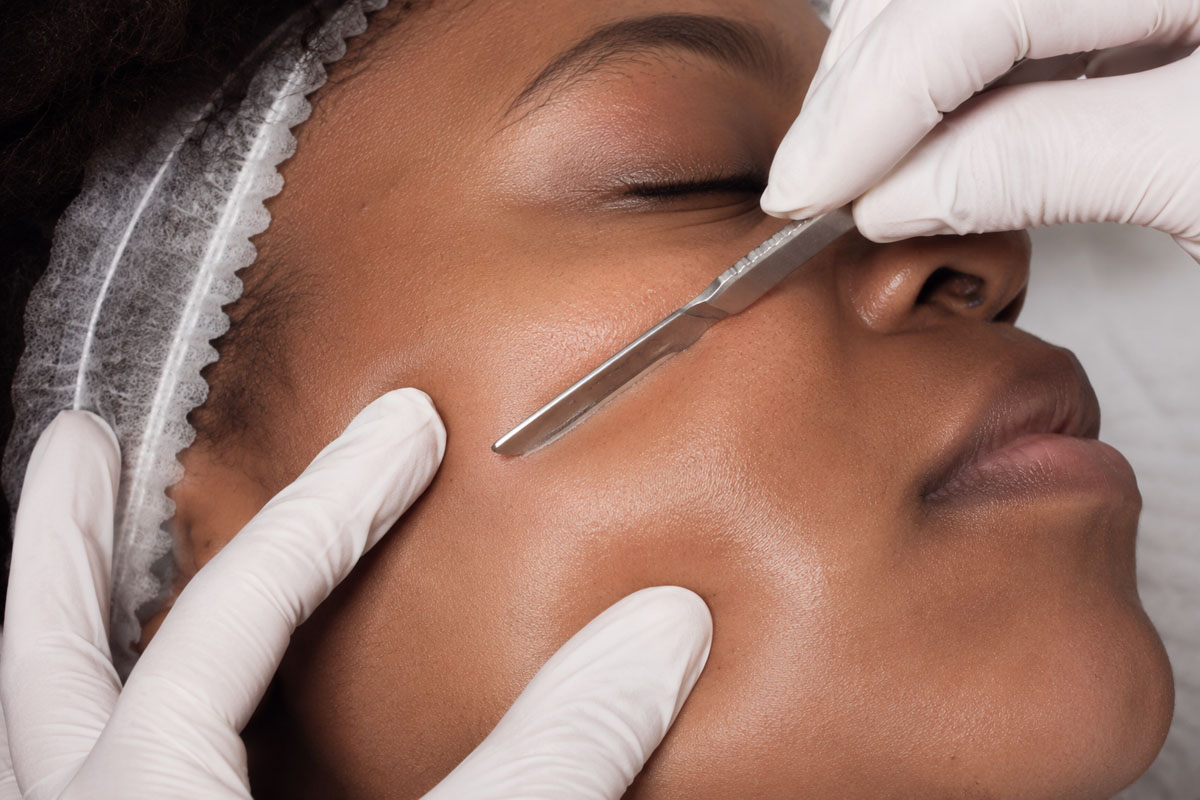
Dermaplaning is a non-invasive exfoliation treatment that uses a sterile, professional-grade surgical scalpel to gently remove the outermost layer of dead skin cells and fine vellus hair (commonly known as peach fuzz) from the surface of the skin. The blade is held at a precise 45-degree angle and swept across the skin in controlled strokes, effectively resurfacing the skin without abrasion, suction, or chemicals.
The result is skin that feels incredibly smooth and soft, looks noticeably brighter, and is primed to absorb skincare products more effectively. Dermaplaning is suitable for most skin types and is an ideal choice for those looking for an immediate, visible improvement in skin texture and tone with no downtime.
Please note: Dermaplaning is not recommended for skin with active, inflamed acne breakouts, as the blade can spread bacteria and further aggravate the skin. It is best to wait until the skin has cleared before scheduling treatment.
What to Expect
- Consultation & Skin Assessment: Your practitioner will assess your skin, review your concerns, and confirm that dermaplaning is appropriate for your skin type and condition. Any contraindications will be discussed prior to treatment.
- Cleanse & Prep: The skin is thoroughly cleansed to remove all traces of makeup, oil, and product. The skin is then held taut to ensure a safe and even treatment.
- The Procedure: Using a sterile surgical scalpel held at a 45-degree angle, your practitioner gently glides the blade across the skin in short, controlled strokes. The sensation is often described as a light tickle or gentle scratching. The treatment is painless and requires no anaesthetic. Sessions typically take 30 to 45 minutes.
- Post-Treatment Application: Following the treatment, a soothing serum, hydrating moisturiser, or calming mask may be applied to settle the skin. SPF is applied to protect the freshly exfoliated surface before you leave.
- Immediate Results: Results are visible immediately. Skin appears smoother, brighter, and more radiant right away. Makeup applies more evenly and skincare products absorb more effectively from the moment of treatment.
- Maintenance Schedule: Dermaplaning results are not permanent, peach fuzz naturally regrows and skin cell turnover continues. Most clients schedule treatments every four to six weeks to maintain smooth texture and a consistent glow.
Benefits
- Smooth, Glowing Skin: Removes the build-up of dead skin cells to reveal a brighter, more radiant complexion with an immediate, visible improvement in skin luminosity.
- Improved Skin Texture: Smooths rough patches and uneven surface texture for a softer, more even complexion.
- Peach Fuzz Removal: Effectively removes fine vellus hair from the face, eliminating the subtle shadow it can cast and allowing light to reflect more evenly off the skin.
- Enhanced Product Absorption: By removing the surface barrier of dead skin cells and peach fuzz, active skincare ingredients (vitamin C, hyaluronic acid, peptides, and retinoids) penetrate more deeply and work more effectively.
- Flawless Makeup Application: Creates a perfectly smooth canvas for foundation and other makeup products, which glide on effortlessly, sit more evenly, and last longer without catching on dry patches or peach fuzz.
- Reduces Fine Lines & Imperfections: Helps minimise the appearance of fine lines, mild acne scarring, and pigmentation by removing the dull outer layer and promoting healthy cell turnover.
- Safe & Painless: When performed by a trained professional, dermaplaning is a safe, comfortable, and highly effective treatment. No needles, no chemicals, and no downtime required.
- Suitable for Most Skin Types: Appropriate for dry, oily, normal, combination, and sensitive skin types, including Fitzpatrick skin types. It is a particularly good alternative for those who cannot tolerate chemical peels or microdermabrasion.
Preparation Instructions
- Prior to Treatment: No specific preparation is required for most clients. Arrive with clean skin, free of makeup and heavy skincare products where possible.
- Active Skincare Products: Discontinue retinoids, AHAs, BHAs, exfoliating acids, and benzoyl peroxide for a minimum of three to five days before your appointment to reduce the risk of sensitivity.
- Accutane: If you have been on Accutane (isotretinoin), wait at least six months after finishing the course before undergoing dermaplaning.
- Sun Exposure & Waxing: Avoid prolonged sun exposure, tanning, and facial waxing for at least one week before treatment.
- Active Breakouts: Do not book dermaplaning if you have active inflamed acne or a cold sore outbreak. Wait until the skin has fully cleared before treatment.
Aftercare
- ⚠️ Crucial Rule: Your skin is freshly exfoliated and highly sensitive following treatment. Do not use any active skincare products (retinoids, AHAs, BHAs, vitamin C, or exfoliants) for at least five days post-treatment, and apply SPF every single morning without exception.
- First 24 Hours: Mild redness or sensitivity is normal and typically subsides within a few hours. Cleanse gently with a fragrance-free cleanser, apply a hydrating serum (hyaluronic acid is ideal), seal with a calming moisturiser, and apply a broad-spectrum SPF 30+. Avoid heat, sweat, and direct sun exposure.
- Days 2 to 5: Continue with a gentle, hydration-focused skincare routine. Use only fragrance-free, non-comedogenic products. Avoid all active ingredients, exfoliants, and anything that could irritate the freshly resurfaced skin. Apply SPF daily.
- Sun Protection: Daily SPF is non-negotiable following dermaplaning. Freshly exfoliated skin is significantly more sensitive to UV exposure, unprotected sun exposure post-treatment can lead to uneven pigmentation, irritation, and premature ageing. Reapply SPF when outdoors.
- Avoid Active Ingredients: Wait at least five days before reintroducing retinoids, AHAs, BHAs, or strong vitamin C formulas. Reintroduce gradually and based on how your skin feels.
- Avoid Heat & Sweat: Refrain from strenuous exercise, saunas, steam rooms, and hot showers for 24 to 48 hours post-treatment, as heat and sweat can irritate the sensitised skin.
- Makeup: You may apply makeup the following day. Choose non-comedogenic, fragrance-free formulas where possible to avoid blocking freshly cleared pores.
- Ongoing Maintenance: Schedule your next dermaplaning session every four to six weeks to align with the skin’s natural cell turnover cycle and maintain smooth, glowing results.
FAQ
Will my facial hair grow back thicker or darker after dermaplaning?
Is dermaplaning suitable for my skin type?
Does it hurt?
When will I see results?
How often should I have dermaplaning?
Can dermaplaning cause breakouts?
Can dermaplaning be combined with other treatments?
Ready to start your skin plan?
Book a consultation and we will design a protocol around you.
Start Your Skin Plan