

LED Light Therapy

Treatments
Start Your Skin PlanSkin Concerns
Return to Skin ConcernsLED Light Therapy
Treatment Description
LED (Light Emitting Diode) light therapy is a non-invasive, painless treatment that uses specific wavelengths of light to trigger natural biological responses within the skin’s cells. Originally developed by NASA for wound healing in space, it has since become one of the most well-researched and widely used treatments in clinical aesthetics, with a wide body of evidence supporting its efficacy for conditions ranging from acne and rosacea to anti-ageing and wound recovery.
Unlike lasers that use a single intense beam, LED therapy emits low-level light energy at precise wavelengths, which penetrates the skin to different depths depending on the colour used. This light energy is absorbed by the mitochondria within skin cells, stimulating the production of ATP (cellular energy), collagen, and elastin, accelerating the skin’s natural repair and rejuvenation processes without any heat, discomfort, or downtime.
Different wavelengths target different skin concerns. Professional LED devices use a combination of colours (red, blue, yellow (amber), and near-infrared) to address multiple concerns simultaneously or in targeted protocols tailored to each client’s skin.
What to Expect
- The Wavelengths: The key wavelengths used in professional LED therapy and their primary actions are:
- Red Light (633 nm): The most widely used and deeply penetrating visible wavelength. Stimulates fibroblasts to produce new collagen and elastin, reduces inflammation, promotes tissue repair, and improves skin firmness and texture. Ideal for anti-ageing, rosacea, scarring, and post-procedure recovery.
- Blue Light (415 nm): The shallowest-penetrating wavelength, targeting the skin’s uppermost layer. Destroys Cutibacterium acnes (the bacteria responsible for acne breakouts) without antibiotics, and reduces sebum production. Clinical studies show blue light reduces inflammatory acne by approximately 34% outperforming topical antibiotics (14%) in head-to-head comparison. Ideal for active acne and oily, congested skin.
- Yellow / Amber Light (590 nm): Penetrates to the superficial dermis, targeting redness, flushing, and visible capillaries. Reduces erythema, soothes inflammation, supports lymphatic drainage, improves skin tone, and increases cellular oxygenation. Particularly well suited for rosacea, sensitive skin, and general skin brightening.
- Near-Infrared Light (830 nm): The deepest-penetrating wavelength, reaching the dermis and beyond. Stimulates collagen at depth, improves circulation, expands capillaries for better tissue oxygenation, accelerates wound healing, and reduces muscle soreness and inflammation. Often combined with red light for enhanced anti-ageing and post-treatment recovery.
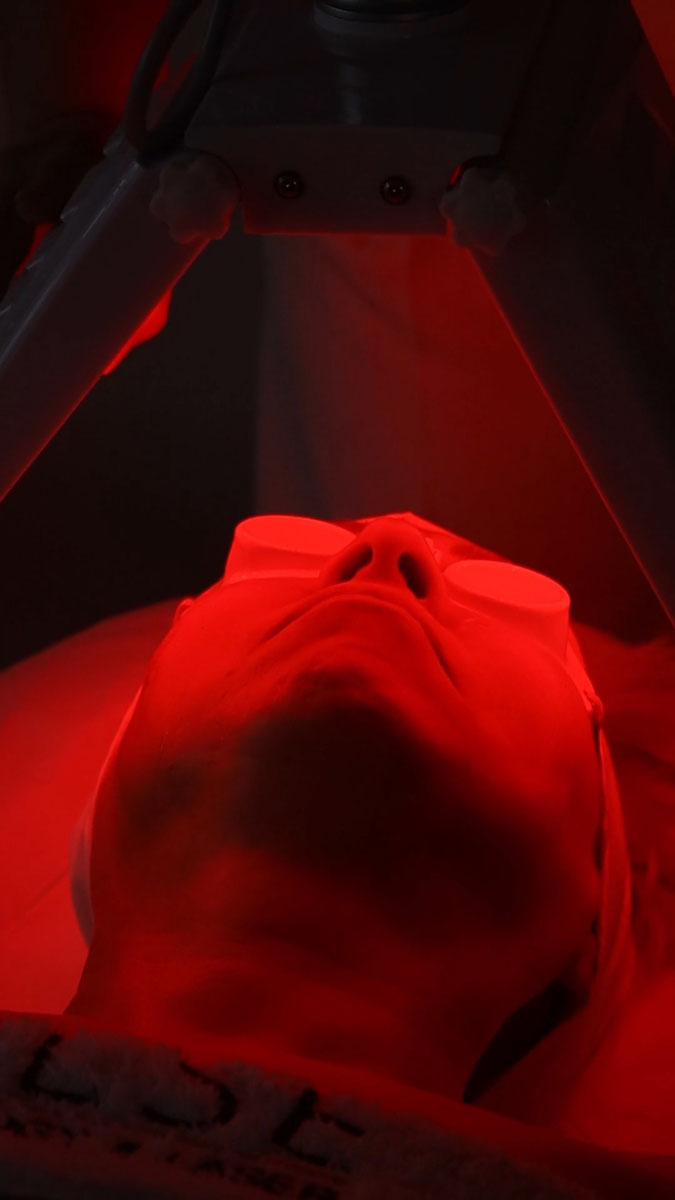
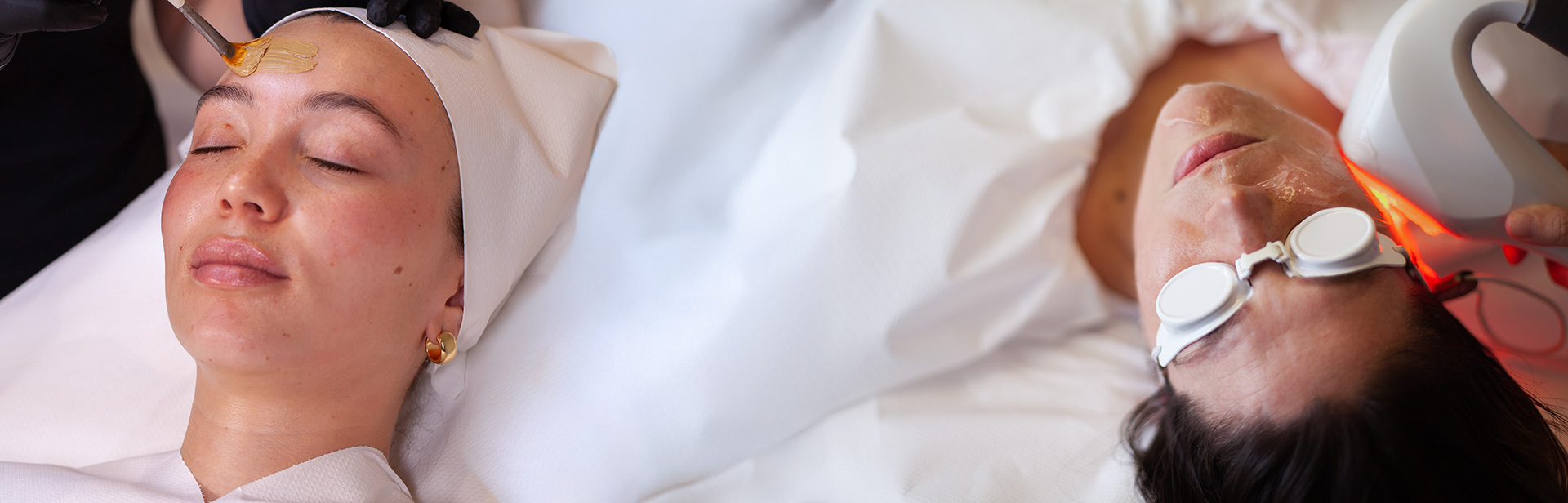
- The Session: You will lie comfortably beneath the LED panel or device, which is positioned close to the skin. No gel is required and the treatment is completely painless — most clients describe the experience as warm and deeply relaxing. Sessions typically last 20 minutes.
- What to Feel: During and after treatment, expect a warm, calming sensation and a sense of skin luminosity. Gradual improvements in skin tone, texture, inflammation, and muscle recovery develop progressively over a course of treatments, with each session building on the last.
Benefits
- Non-Invasive & Painless: LED therapy is completely non-invasive, pain-free, and requires no needles, chemicals, or recovery time, making it suitable for even the most sensitive skin types.
- Stimulates Collagen & Elastin: Red and near-infrared wavelengths stimulate fibroblast activity and ATP production, promoting the formation of new collagen and elastin for firmer, smoother, more youthful skin.
- Clinically Proven for Acne: Blue light destroys acne-causing bacteria and reduces oil production — clinically shown to outperform topical antibiotics in reducing inflammatory acne lesions.
- Calms Redness, Rosacea & Psoriasis: Yellow and red wavelengths reduce vascular inflammation, soothe reactive capillaries, and have shown significant improvement in inflammatory autoimmune skin conditions including rosacea and psoriasis.
- Reduces Pigmentation & Brown Spots: Targeted wavelengths decrease excess melanin activity and reduce the appearance of age spots, sun damage, and uneven skin tone.
- Accelerates Healing & Recovery: LED therapy is widely used as a post-procedure treatment to accelerate skin recovery, reduce swelling, and calm post-inflammatory redness after procedures such as microneedling, lasers, and chemical peels.
- Safe for All Skin Types: LED therapy is safe and effective across all skin tones and types (including dark and ethnic skin) with no risk of burns, post-inflammatory hyperpigmentation, or adverse reactions.
- No Downtime: There is no downtime following LED therapy. Clients can return to their normal activities immediately after each session.
Preparation Instructions
- Prior to Treatment: No specific preparation is required. Arrive with clean skin, free of heavy makeup and skincare products where possible to allow maximum light penetration. Remove contact lenses if having a facial LED session.
- No Contraindications to Avoid: LED therapy is one of the most universally safe aesthetic treatments available. There are very few contraindications. Inform your practitioner if you are pregnant, taking photosensitising medications, have active epilepsy, or have recently had laser or light-based treatments over the same area.
Aftercare
- Sun Protection: Apply a broad-spectrum SPF 30 or higher daily, particularly after facial LED sessions, to protect the skin from UV exposure and preserve your results.
- Hydration: Keep the skin well moisturised following treatment to support the cellular renewal processes stimulated by the LED light.
- Skincare: You may continue your normal skincare routine immediately following LED therapy. In fact, the skin’s enhanced absorption following treatment makes it an ideal time to apply serums and active ingredients.
- Frequency: LED light therapy is safe for daily use. For optimal results, a course of multiple sessions is recommended, typically two to three times per week for an initial course of six to twelve sessions, followed by regular maintenance.
FAQ
How often can I have LED light therapy?
Is it safe for all skin types?
Which LED colour is right for my concern?
Is it painful?
How soon will I see results?
Can LED therapy be used alongside other treatments?
Is LED therapy the same as laser?
Ready to start your skin plan?
Book a consultation and we will design a protocol around you.
Start Your Skin Plan