

Cortisone Injections

Treatments
Start Your Skin PlanSkin Concerns
Return to Skin ConcernsCortisone Injections
Treatment Description
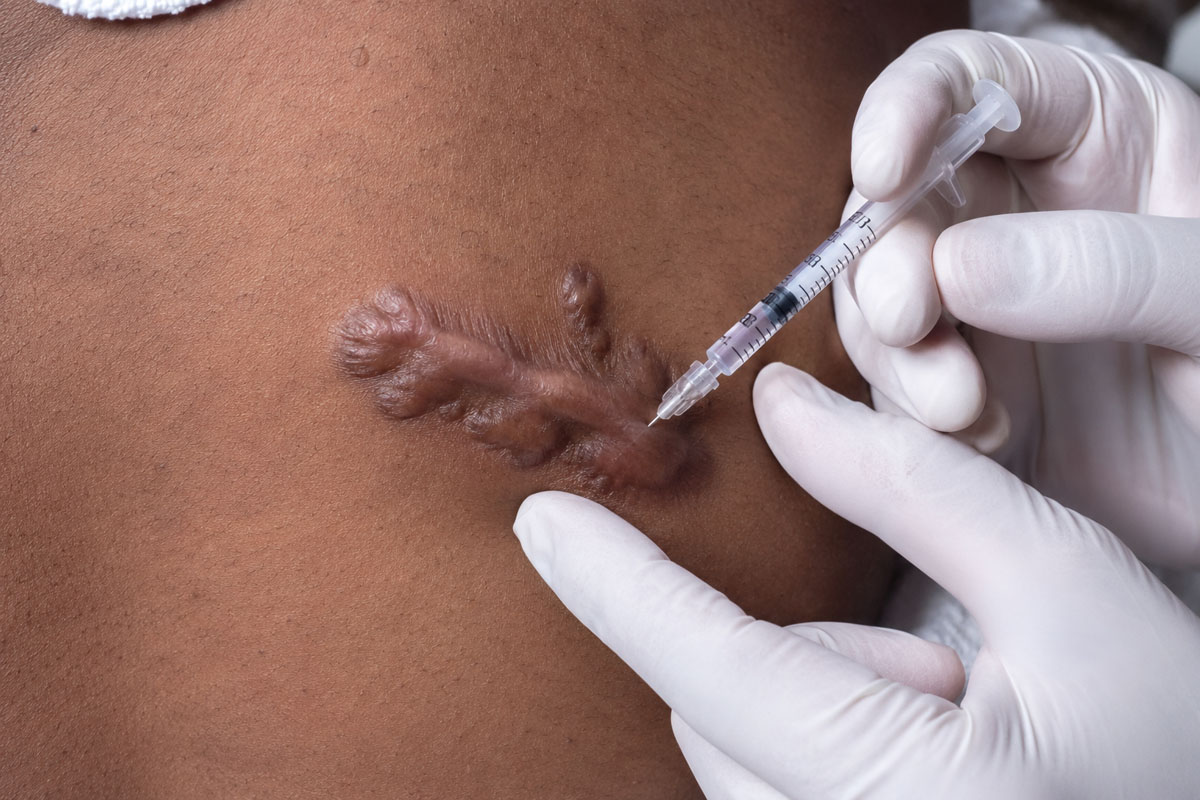
Cortisone injections (also known as intralesional corticosteroid injections) are the gold standard, first-line clinical treatment for keloid and hypertrophic scars. Administered by a doctor, the treatment involves injecting a corticosteroid medication, typically triamcinolone acetonide (TAC), directly into the scar tissue. This works by breaking down excess collagen bonds, suppressing inflammation, and reducing fibroblast activity, rapidly flattening, softening, and diminishing the symptoms of the scar.
Keloid scars are a form of abnormal wound healing in which scar tissue grows beyond the boundaries of the original wound, often becoming raised, firm, and itchy. Hypertrophic scars are similar in appearance but remain within the wound margins. Both types of scar can be effectively managed with a course of cortisone injections, with approximately 70 to 80% of patients responding positively to treatment.
Early intervention yields the best results, keloids treated within six to twelve months of formation respond more readily than older, well-established scars. Younger and smaller keloids also tend to respond more favourably to treatment than highly established ones.
What to Expect
- Consultation: Your doctor will assess the scar, review your medical history, and confirm suitability for treatment. The procedure, expected outcomes, and any potential side effects will be explained in full.
- The Procedure: The cortisone is injected directly into the scar tissue using a fine needle. Sessions take approximately 15 minutes and are performed in a clinical setting. To minimise discomfort, the doctor may combine the cortisone with a local anaesthetic such as lidocaine, causing only a brief stinging sensation during injection.
- Treatment Timeline: Sessions are typically repeated every three to six weeks. Depending on the size and maturity of the keloid, monthly sessions for up to six months may be recommended to achieve optimal results. Visible improvement generally begins after one to two injections.
- Effectiveness: Approximately 70 to 80% of patients respond positively to steroid injections. Younger and smaller keloids respond better than older, more established ones. Optimal results are typically achieved within four to six months of treatment.
- Combination Approaches: For more resistant keloids, cortisone injections may be combined with other modalities such as cryotherapy, laser therapy, or silicone sheeting to improve outcomes and reduce the risk of recurrence.
Benefits
- Gold Standard Treatment: Intralesional corticosteroid injection is the internationally recommended first-line treatment for keloid and hypertrophic scars, backed by decades of clinical evidence and proven efficacy.
- Flattens and Softens Scars: Breaks down excess collagen and reduces the raised, thickened texture of keloid and hypertrophic scars for a flatter, smoother appearance.
- Reduces Symptoms: Significantly reduces associated symptoms including itching, tenderness, and discomfort caused by active scar tissue.
- High Success Rate: Approximately 70 to 80% of patients respond positively to treatment, making it one of the most effective non-surgical options available for scar management.
- Targeted Delivery: The medication is injected directly into the scar tissue, delivering potent anti-inflammatory and collagen-suppressing effects precisely where they are needed.
- Minimal Downtime: Injections are quick outpatient procedures taking approximately 15 minutes, with no significant recovery time required.
- Suitable for Ethnic Skin: Particularly important for patients with darker skin tones, who are more prone to keloid formation, cortisone injections provide an effective, non-surgical management option without the risk of additional scarring.
- Combinable: Can be combined with other scar treatments such as cryotherapy, laser resurfacing, or silicone therapy for enhanced results in resistant cases.
Preparation Instructions
- Prior to Treatment: Avoid blood-thinning medications and supplements such as aspirin, ibuprofen, and fish oil for one week before your appointment, as these can increase the risk of bruising at the injection site.
- Medications to Disclose: Inform your doctor of all current medications, particularly NSAIDs, antiretrovirals, antifungals, blood pressure medications, or treatments for diabetes or thyroid conditions, as these may interact with triamcinolone acetonide.
- Skincare: Do not apply topical creams, silicone gels, or any active skincare products directly to the scar on the day of treatment.
- Contraindications: Cortisone injections are generally not recommended during pregnancy or breastfeeding, or for patients with active skin infections over the scar area. Your full medical history will be reviewed at consultation.
Aftercare
- ⚠️ Crucial Rule: Do not pick at, scratch, or apply pressure to the treated scar area following your injection. Allow the medication to work undisturbed within the scar tissue.
- Immediately After: Mild redness, swelling, or a stinging sensation at the injection site is normal and typically resolves within a few hours. An ice pack can be applied gently to reduce discomfort if needed.
- Sun Protection: Protect the treated area from direct sun exposure and apply a broad-spectrum SPF daily. Sun exposure can worsen pigmentation changes and compromise healing in scar tissue.
- Silicone Therapy: Your doctor may recommend the use of silicone gel or silicone sheeting between sessions to maximise results and help prevent keloid recurrence. This should be used as directed.
- Avoid Irritants: Do not apply retinols, acids, or active skincare ingredients directly over the scar for at least 48 hours post-injection.
- Follow-Up Sessions: Attend all recommended follow-up appointments, as the full course of treatment (typically three to six sessions) is required to achieve optimal flattening and symptom reduction.
- Monitor for Side Effects: Report any unusual skin changes, such as significant skin thinning, hypopigmentation (lightening of the skin), or signs of infection, to your doctor promptly.
FAQ
How many sessions will I need?
Does it hurt?
How effective are cortisone injections for keloids?
Are there any side effects?
Will the keloid come back after treatment?
Can cortisone injections be combined with other treatments?
Are cortisone injections suitable for darker skin tones?
Ready to start your skin plan?
Book a consultation and we will design a protocol around you.
Start Your Skin Plan


